Wanjiru Kamau
Tetu, Nyeri · Kenya · 1810 masl
Overview
Wanjiru manages the Gatomboya factory in Tetu, which serves roughly four hundred smallholders, most with a few hundred trees behind the house. Kenya's system is built for pooling: cherry arrives, gets graded, gets washed together, and leaves as a factory lot. Wanjiru has spent six years carving single-farm lots back out of it, which the auction system does not reward and the buyers rarely pay for.
The factory
SL28 and Ruiru 11 at 1810 masl on the red volcanic soil Nyeri is known for. Cherry is delivered the day it is picked and floated on arrival; anything that floats goes to a separate, lower grade rather than being quietly folded back in. This lot is the top pass from twenty-two farms on the same ridge, kept together because they share soil and altitude, not because they share an owner.
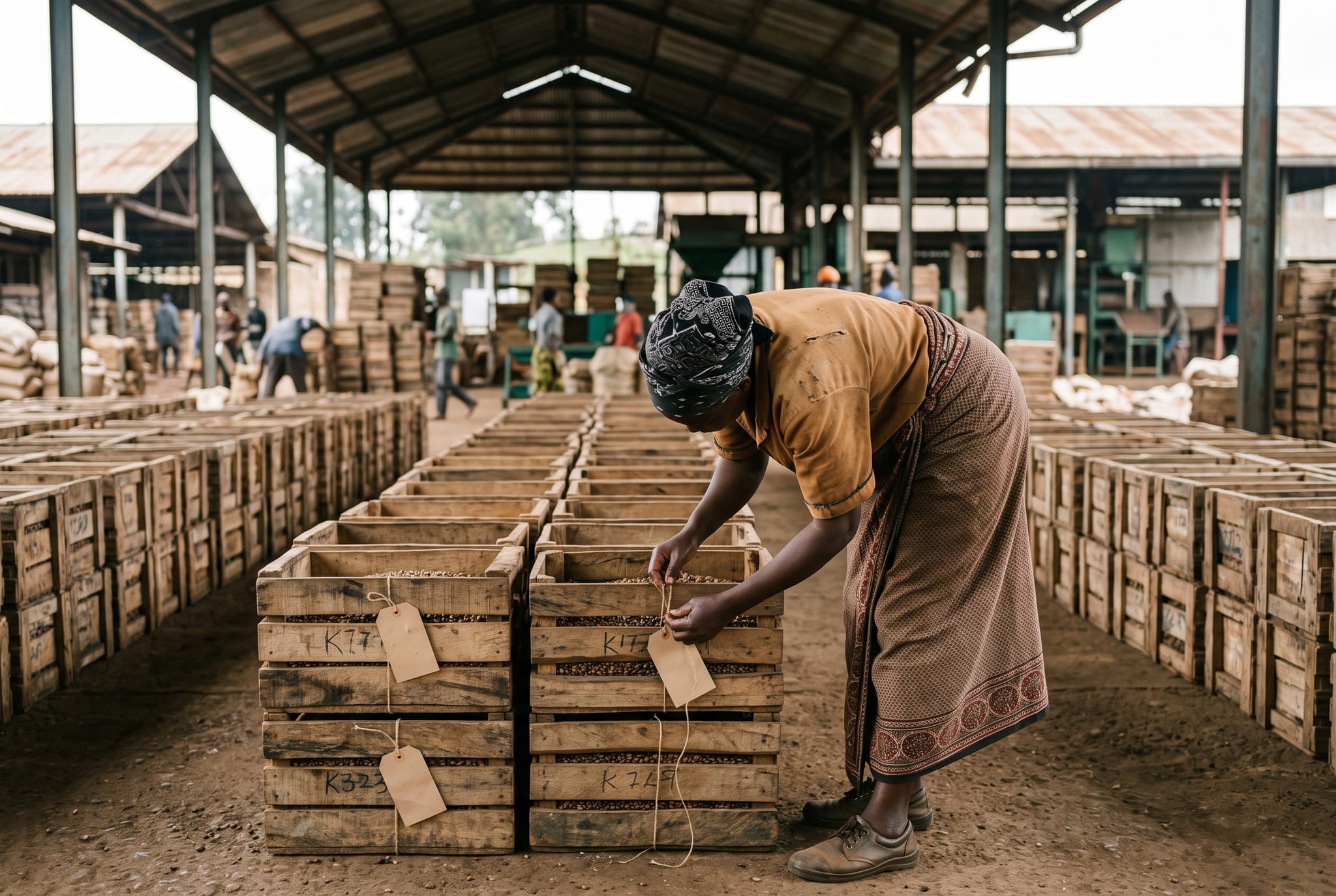
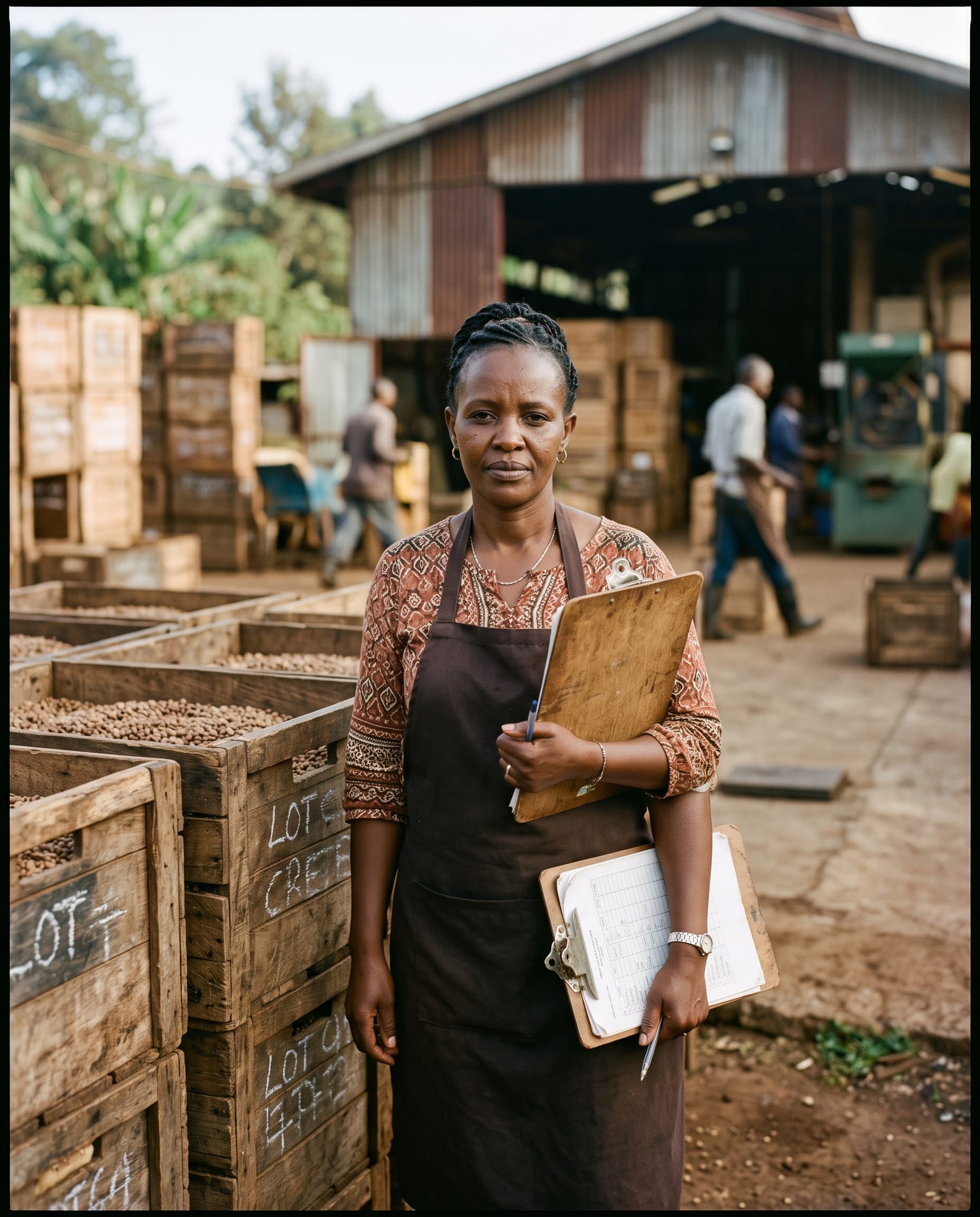
The factory takes cherry from four hundred smallholders. Keeping one farm's lot separate means somebody has to stay late and label it. We stay late.
Wanjiru Kamau · Tetu, Nyeri
The process
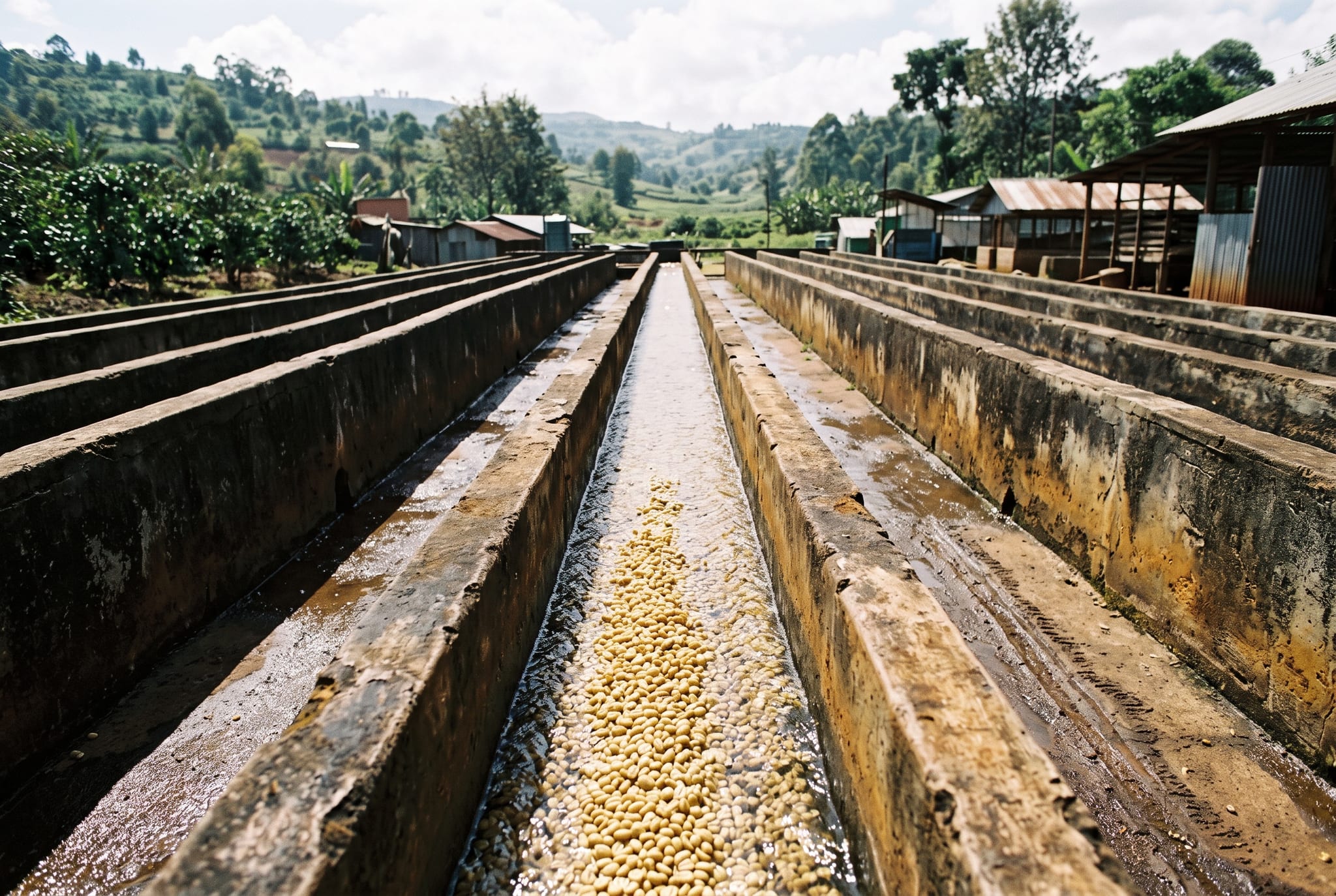
The Kenyan double wash, done properly. Pulped on arrival, fermented seventy-two hours under water, washed, graded in the channel, then soaked a further sixteen hours in clean water before it goes to the beds. That soak is the step most factories drop when the season is busy. It is also the step that makes the acidity taste like blackcurrant rather than like something sharp and unplaceable.
The coffee
Light — first crack at 9:12, dropped at 11:00, 215.6 °C. The lightest thing we roast, and it took three attempts to get there: pushed even slightly further the blackcurrant flattens into something generically fruity. The published curve is the third attempt. The note taped to the log says ignore the sheet on this lot, which is honest.
Read the profile — Strecker-05 →Want the next lot from this ridge?
Say so and we will hold one back. Same address as everything else on this site.