Sari Wibowo
Sapan, Toraja · Indonesia · 1450 masl
Overview
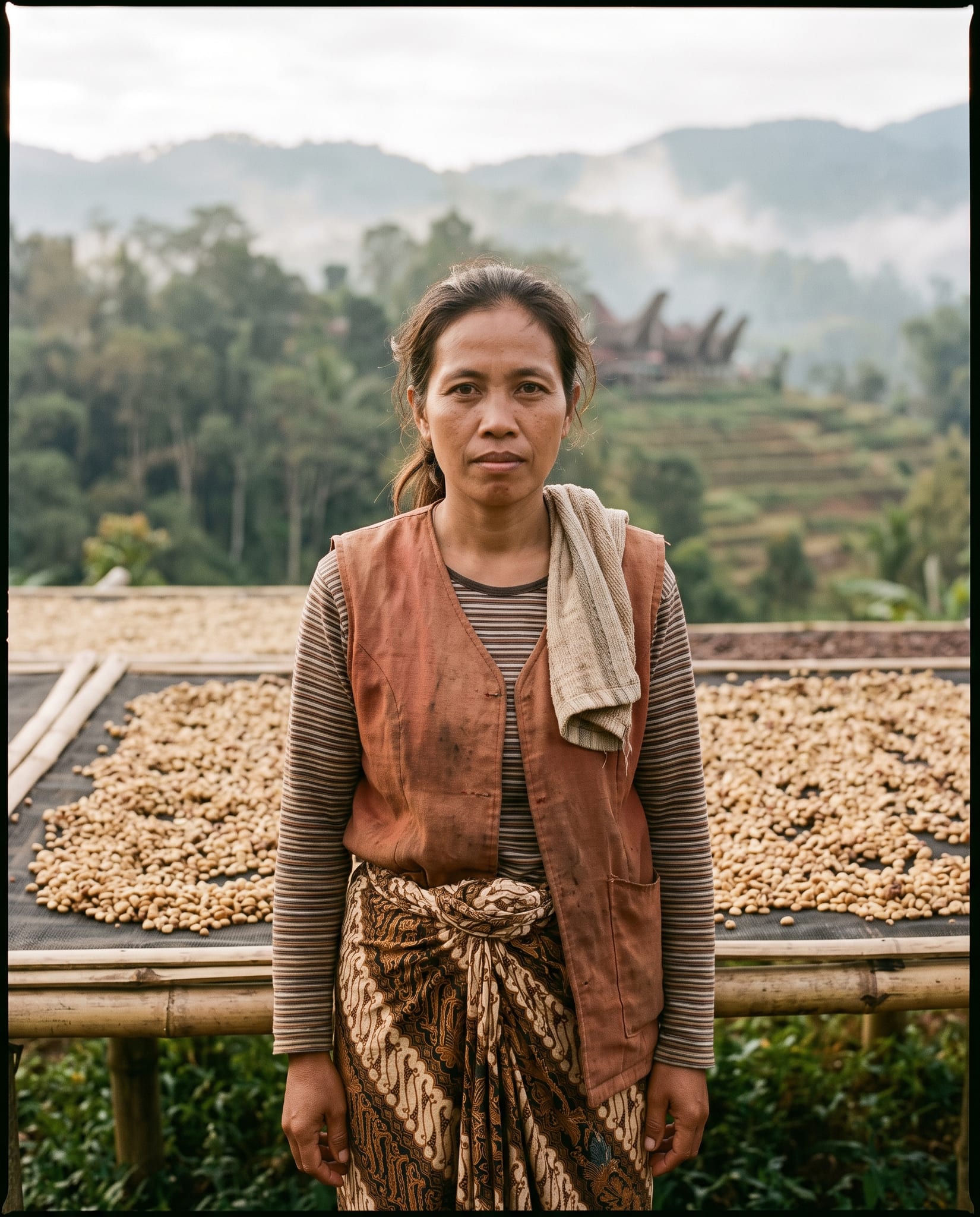
Sari farms two and a half hectares on the Sapan ridge, land his family has worked since the 1970s and which he took over in 2011. Toraja has a reputation for coffee that arrives inconsistent, and most of it is deserved — cherry from dozens of smallholders gets pooled at the mill and dried on whatever surface is free. Sari stopped selling into that pool in 2019.
The farm
Typica and S795 under shade trees the family never cleared, at 1450 masl — low by specialty standards, which is why the picking matters more here than almost anywhere else we buy. Cherry ripens unevenly across the ridge, so the plot is picked in seven passes over five weeks. Sari pays by the kilo of ripe cherry rather than total weight, which costs him pickers in the first season of every year and gets him the same crew back in the second.
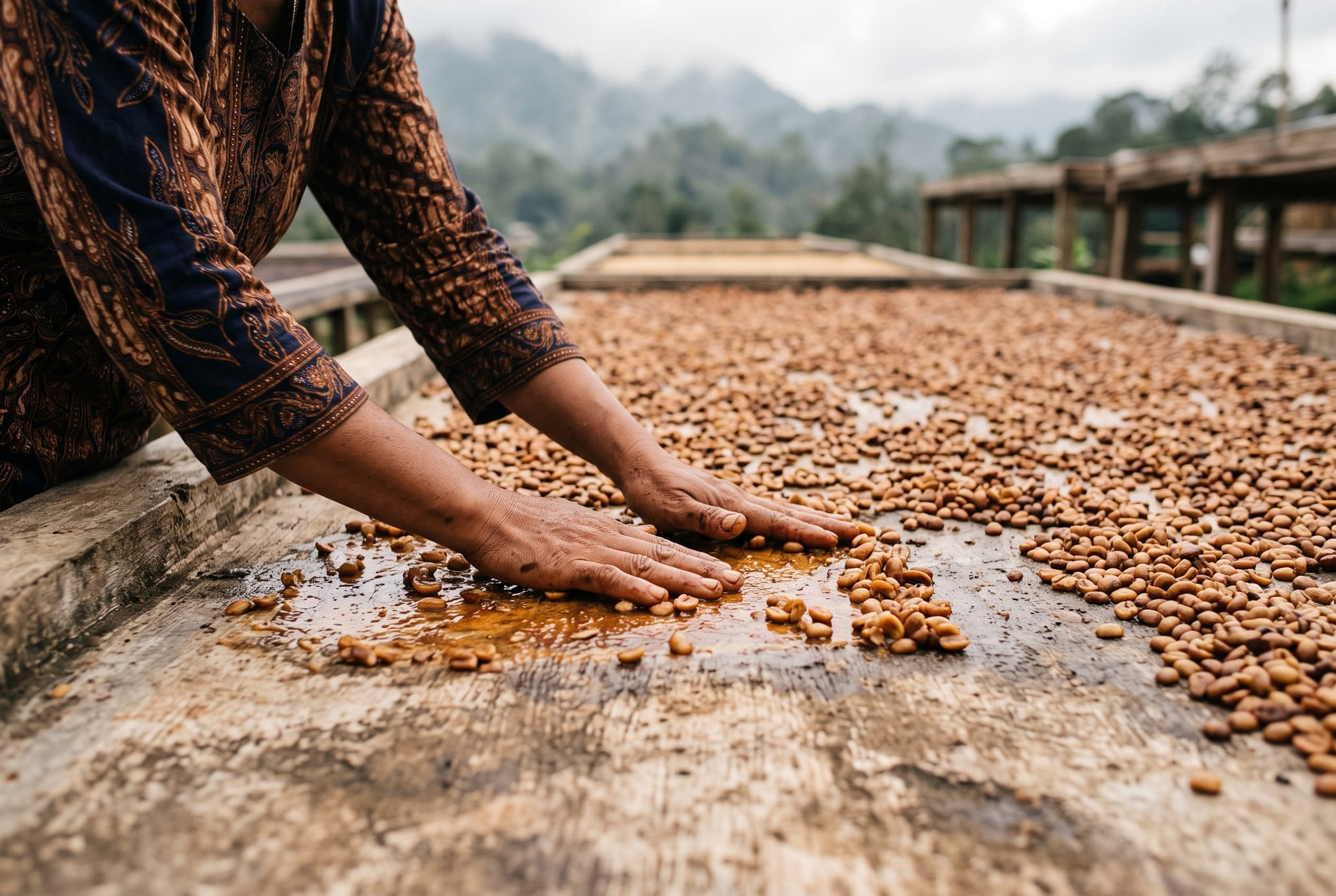
The mucilage decides everything here. Leave it a day too long and you get vinegar, take it off early and you get nothing at all.
Sari Wibowo · Sapan, Toraja
The process
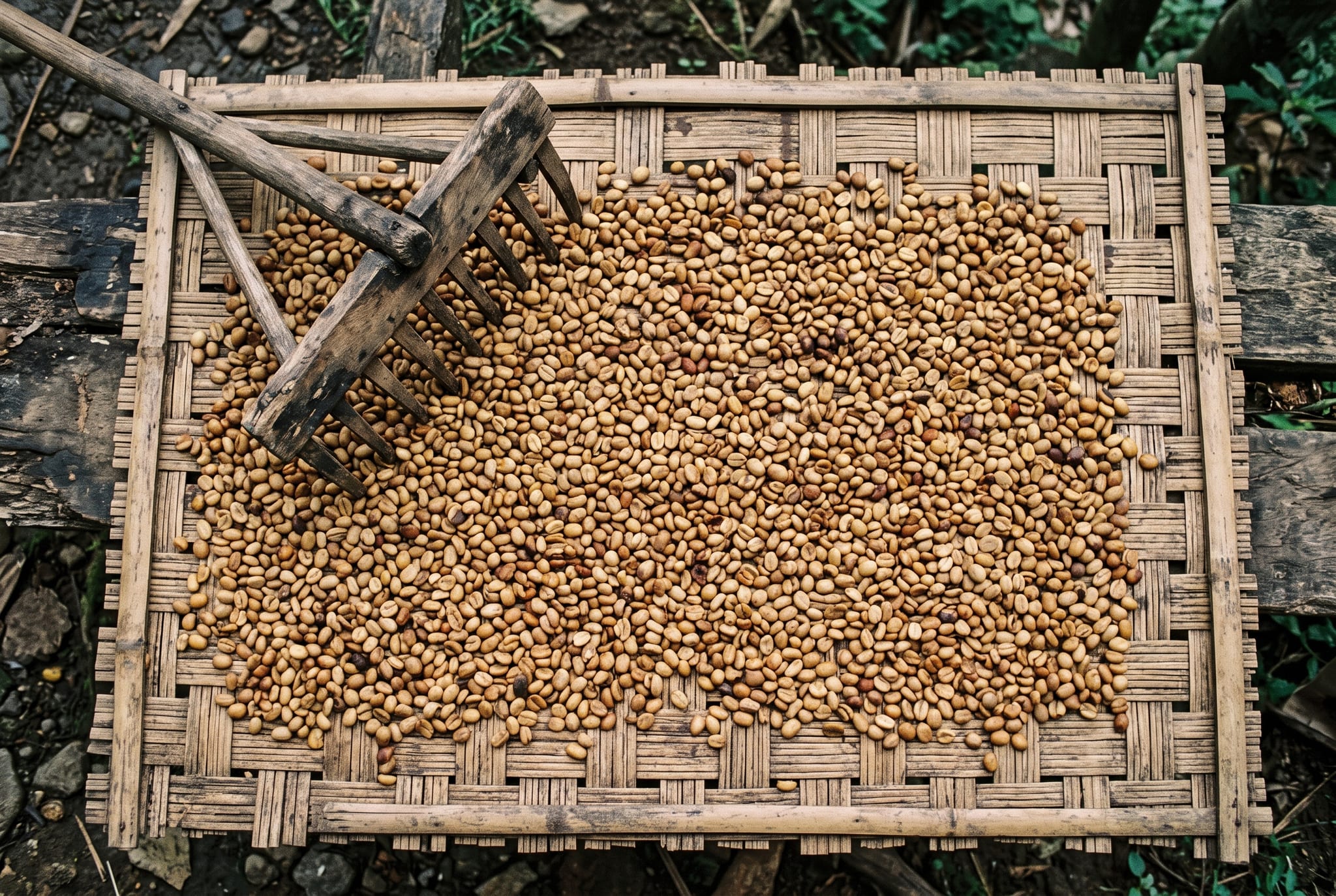
Honey process, which in Toraja usually means whatever the weather allowed. Sari pulps the same evening, leaves the mucilage on whole, and moves the parchment onto covered raised beds rather than the concrete patio most of the valley uses. Nine days, turned four times daily, pulled under cover every afternoon before the rain that arrives most days at four. The covering is the whole difference: it is why this tastes like clove rather than like wet cardboard.
The coffee
We take it dark — first crack at 10:44, dropped at 13:04, 228.3 °C. That is further than we take anything else on this list, and it is deliberate: the sugars in a nine-day honey want the heat, and pulled short this cup reads thin and slightly savoury. The whole curve is published, including the stall at four minutes that we corrected on the second batch.
Read the profile — Strecker-02 →Want the next lot from this ridge?
Say so and we will hold one back. Same address as everything else on this site.