Marisol Xoc
La Libertad, Huehuetenango · Guatemala · 1620 masl
Overview
Marisol inherited three hectares in La Libertad from her father in 2016, on a north-facing slope he had been told repeatedly was the wrong aspect for coffee. She kept it. The farm sits close enough to the Mexican border that most of the region's cherry crosses it and is sold as Chiapas; keeping the lot named and in Guatemala costs her about a week of paperwork every harvest.
The farm
Bourbon and Caturra at 1620 masl, on the slope nobody wanted. North-facing means less direct sun and a longer, slower ripening, which is exactly why the cup has the density it does — and also why the crop comes in two to three weeks after everyone else's, when the mill is quiet and the buyers have gone home. Picked twice over, in two passes about eleven days apart.
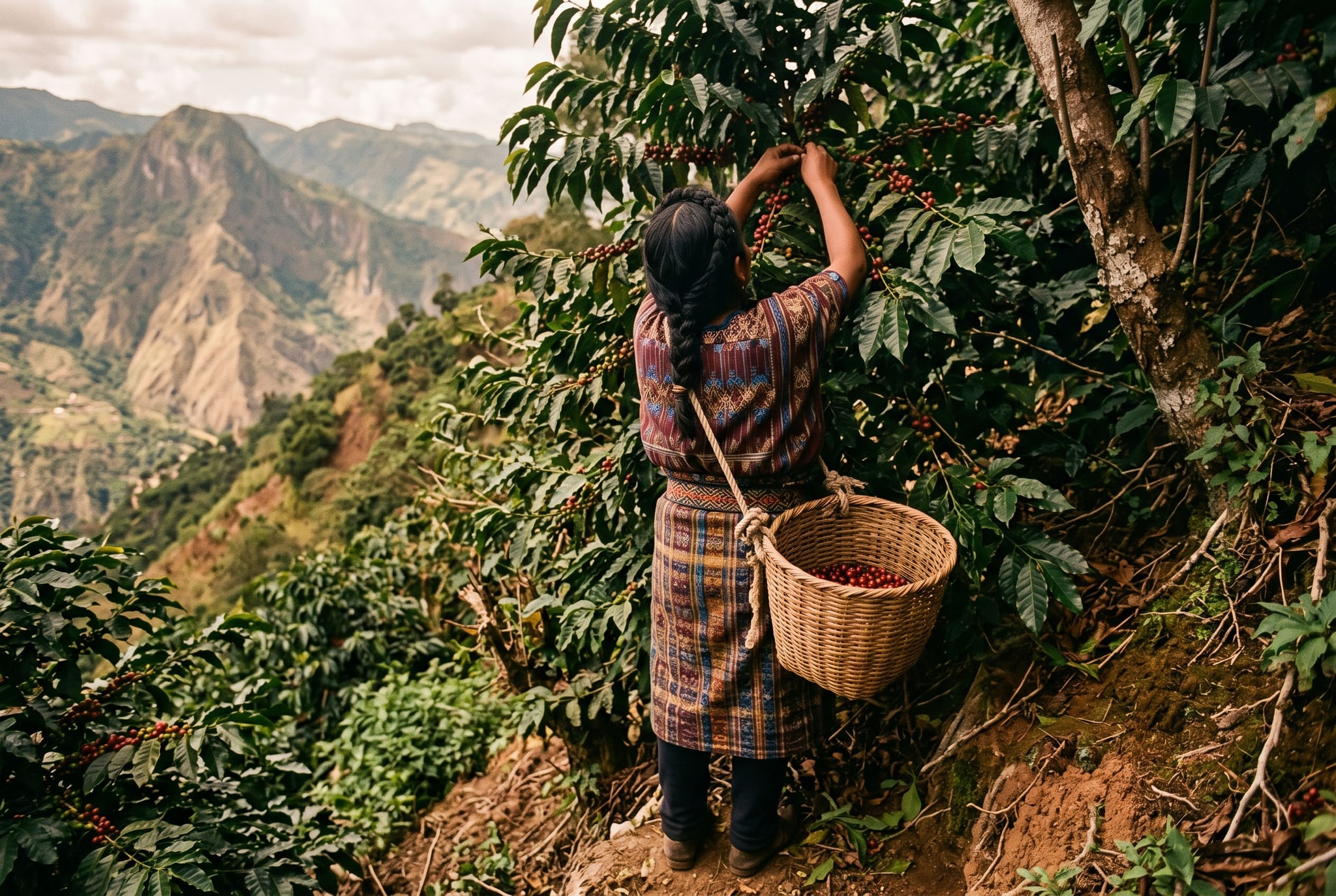
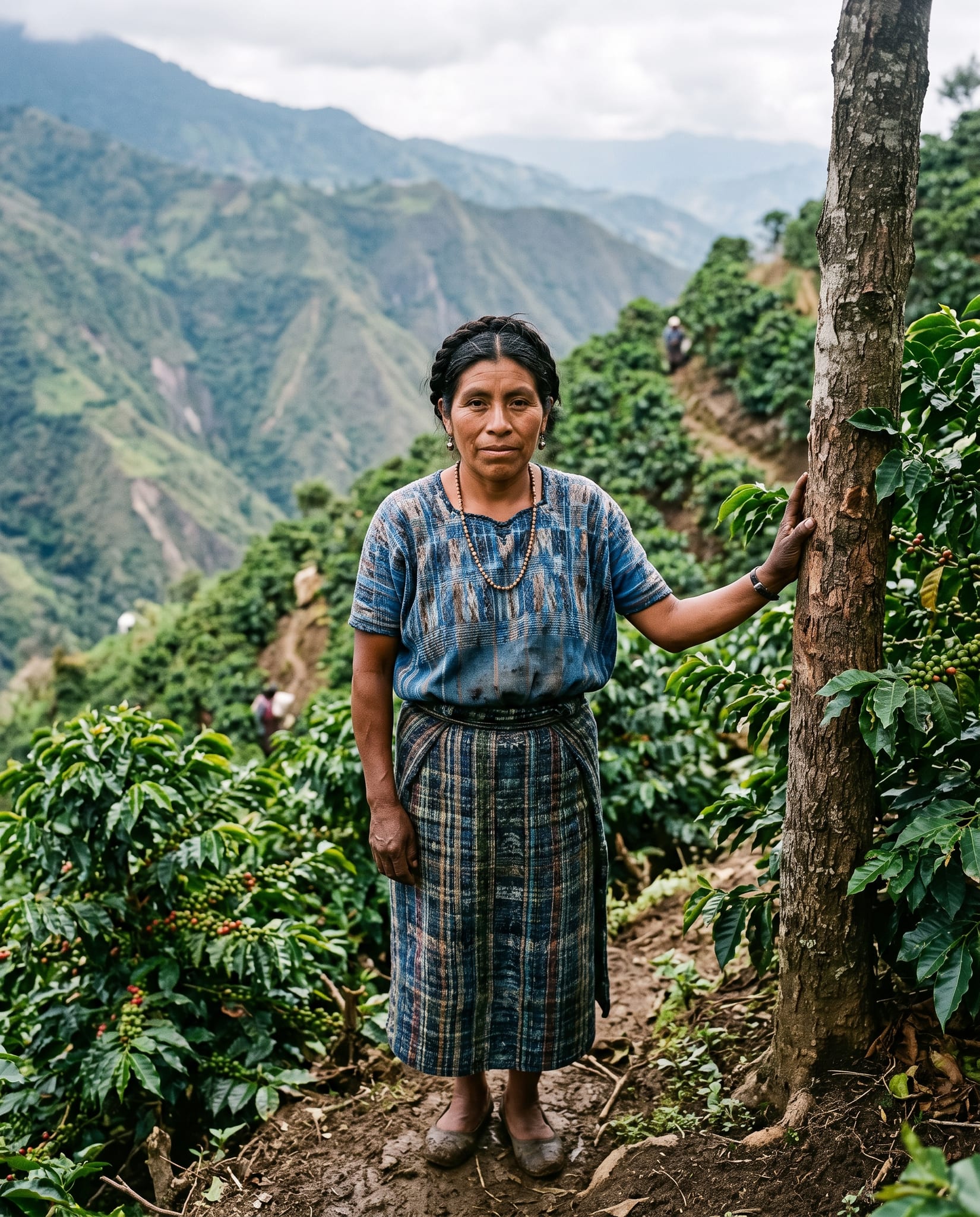
My father planted these trees on a slope nobody wanted. The slope is why it tastes like this, and it is also why we pick everything twice.
Marisol Xoc · La Libertad, Huehuetenango
The process
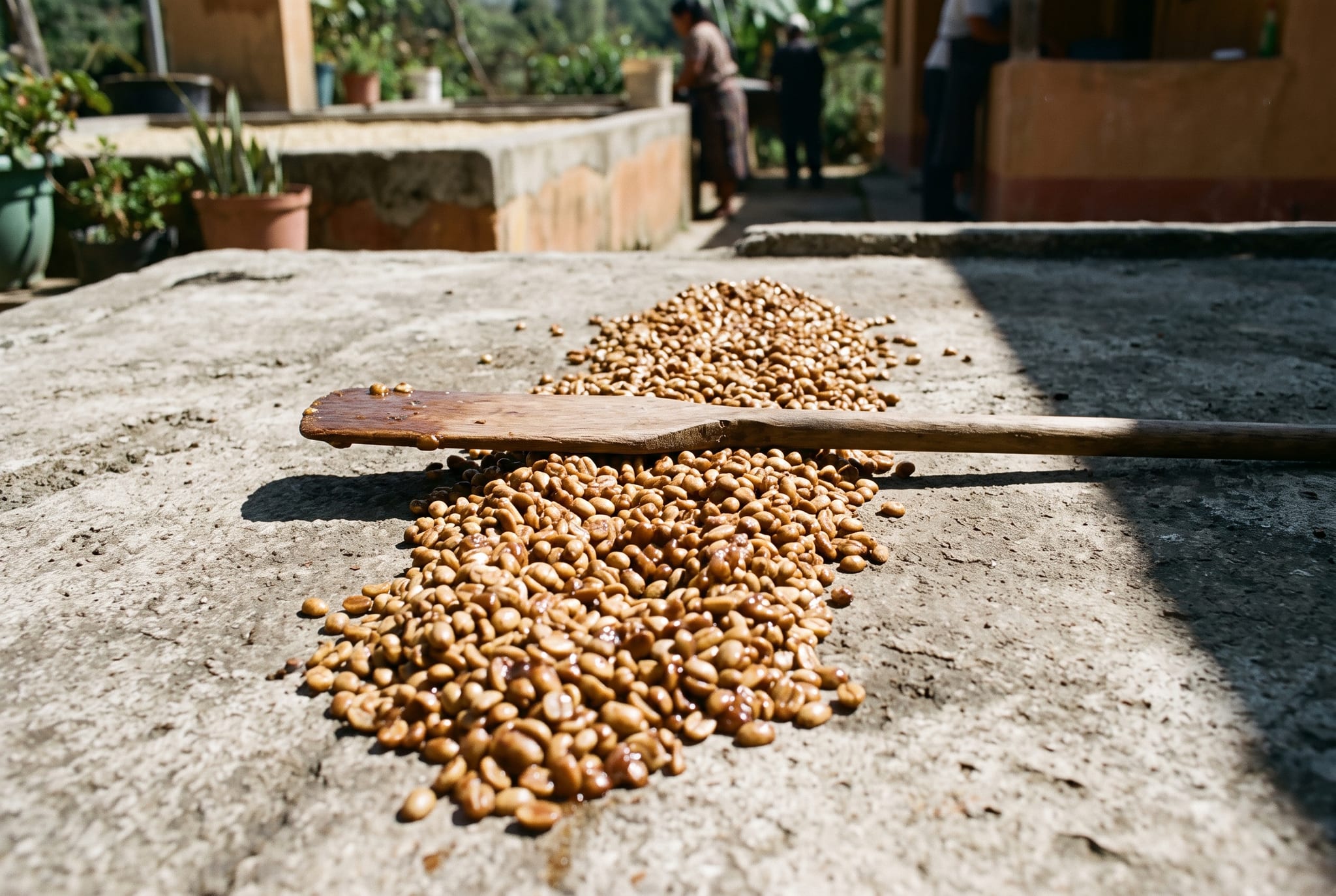
Honey — pulped the evening of picking, mucilage left on, twelve days on raised beds under a shade roof. Huehuetenango is dry enough in February that most producers can dry on patios without much risk, so the beds are a choice rather than a necessity: they cost more and they keep the drying even top to bottom, which is what stops the molasses note turning into something flatter.
The coffee
Dark — first crack at 10:24, dropped at 12:34, 226.1 °C. Taken further than the Huila for the same reason as the Toraja: a twelve-day honey carries sugar that wants the heat. The published curve includes the batch we dropped twenty seconds late, which turned out better than the one before it and is the one in the bag.
Read the profile — Strecker-04 →Want the next lot from this slope?
Say so and we will hold one back. Same address as everything else on this site.